How to Find a Dead Rat in Your Roof: A Brisbane Homeowner’s Guide
Waking up to that unmistakable, sickly-sweet scent of decomposition is a dread every Brisbane homeowner knows. In our subtropical climate, a dead rat in the roof isn’t just an annoyance—it’s a ticking clock. But how do you find a small carcass in a vast, dark, and often dangerous roof cavity?
The Challenge of the Queensland Roof
Brisbane architecture, particularly our beloved Queenslanders and older timber-framed homes, provides a labyrinth of hiding spots for rodents. Rat problems often peak after heavy storms when rodents seek dry shelter, or during seasonal changes. When a rat dies—whether from old age, injury, or baiting—it often seeks out the most secluded, insulated spot it can find.
1. The Smell Mapping Technique
Before you even put on your mask, use your nose. Odor doesn’t always move in a straight line; it follows airflow. In a typical Brisbane home, air travels from window to door, through ceiling vents, and up into the roof.
Sniff Test: Walk through every room with the windows closed. Where is the smell strongest? Is it near a specific light fitting? A manhole access? Or perhaps near a wall? If the smell is strongest near a ceiling fan, the carcass is likely directly above it. If it’s stronger near a wall, the rat might have fallen down a cavity.
2. Visual Indicators: Follow the Flies
Nature has its own detection system. Blowflies are incredibly efficient at finding carrion. If you notice a sudden swarm of large, metallic-green or blue flies inside your home, they are likely escaping the roof cavity after being born on the carcass. Watch where they congregate. If they are hovering around a specific ceiling rose or vent, you’ve found your primary search zone.
Check for Stains: As a carcass decomposes, it releases fluids. On a plasterboard ceiling, this eventually manifests as a yellowish or brown "wet" spot. If you see a stain appearing where there was none before, and it coincides with the smell, the carcass is directly behind that spot.
3. Entering the Roof Safely
Locating a dead animal often requires physical entry into the ceiling. Safety Warning: Never enter a roof cavity without turning off the mains power. Brisbane roofs can reach 60°C in summer, and the risk of heat exhaustion or accidental contact with live wires or asbestos is high.
Once inside, look for:
- Disturbed Insulation: Rats love nesting in fiberglass or cellulose insulation. Look for areas that look "puffed up" or have clear tunnels.
- Vermin Droppings: Fresh droppings often point toward high-traffic areas where a rat might have met its end.
- The "Mass": In the later stages of decomposition, the carcass might be covered in maggots. This "mass" actually generates a small amount of heat and can be spotted with thermal imaging cameras used by professionals.
4. Common Hiding Spots
In our experience servicing Brisbane suburbs like Toowong and Chermside, rats tend to die in predictable places:
- Near the Eaves: They seek the cooler airflow near the edges of the roof.
- Inside AC Ducts: A nightmare scenario, as it spreads the smell through the whole house.
- Behind Water Tank Plumbing: Especially if they were seeking water before passing.
- Bottom of Wall Cavities: If they fell and couldn’t climb out.
Conclusion: When to Call the Pros
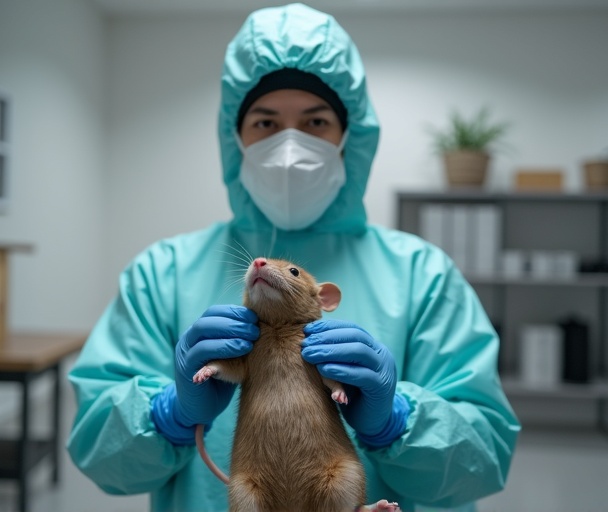
Finding a dead rat is only half the battle. Once found, it must be removed without rupturing the carcass, and the area must be professionally decontaminated to kill bacteria. If you can’t locate the source within 24 hours, or if access is too dangerous, contact a specialist. At , we use advanced detection tools and hospital-grade sanitizers to ensure your home is safe and fresh again.